Why Another Article on Weight Loss?
Because most people still believe it’s about “eat less, move more”—full stop. In reality, sustainable weight loss is a multi-factor puzzle that spans biology, psychology, movement, environment, and accountability. Below you’ll learn:
- how many calories to cut—safely
- why strength work trumps endless cardio
- the lifestyle levers that quietly torpedo fat-loss efforts
- the role a qualified coach plays in lasting change
For a deeper, step-by-step program—including plug-and-play meal plans—visit our comprehensive How to Lose Weight guide. And if you’d like personal guidance, explore coaching over at Open To Change.
1. Energy Balance 101
At its core, weight change depends on energy balance: calories in versus calories out. But how big should the gap be? The NHS recommends aiming for a deficit that produces 0.5–1 kg (1–2 lb) of loss per week, typically by trimming about 600 kcal a day from maintenance intake (nhs.uk). Faster isn’t better; steep deficits risk muscle loss, metabolic slowdown, and rebound binges.
Quick Maintenance Check
- Weigh yourself three mornings in a row.
- Track everything you eat for those three days.
- Average the daily calories; if weight stayed stable, that’s maintenance.
Subtract 10–20 %. Example: maintenance 2,200 kcal → fat-loss target 1,760–1,980 kcal.
(Our online Calorie Blueprint inside the main How to Lose Weight guide walks you through this automatically.)
2. Food Quality: The 80/20 Rule
Calorie math matters, but where those calories come from influences hunger, energy, and adherence.
| Food Category | Why It Helps | Everyday Picks |
|---|---|---|
| Lean protein | Preserves muscle, increases satiety | Chicken, turkey, tofu, Greek yogurt |
| High-volume veg & fruit | Fibre fills plate, micronutrients promote health | Berries, spinach, peppers |
| Smart carbs | Fuel workouts, stabilise blood sugar | Oats, quinoa, lentils, whole-grain pasta |
| Healthy fats | Hormone health, flavour | Olive oil, avocado, mixed nuts |
Aim for 1.6–2.2 g of protein per kg body-weight; research shows this range protects lean mass during deficits.
3. Strength Training: The Fat-Loss Multiplier
Diet drives weight loss; lifting keeps muscle on your frame and your metabolism humming. A 2017 review found that resistance exercise “attenuates or even prevents” muscle loss during dieting (PMC). Bonus: each extra kilogram of muscle burns ~13–15 kcal/day at rest—small per kilo, but meaningful over your entire musculature.
Template:
- 3 sessions/week—full-body or upper/lower split
- Big moves first: squats, lunges, rows, presses, hip hinges
- Rep range: 6–12 for muscle retention, 2–3 sets each
- Progression: add a rep or 1–2 kg when you hit top reps cleanly
No gym? Resistance bands and weighted backpacks can still stimulate growth.
For video demos and printable logs, grab them inside the How to Lose Weight guide.
4. Cardio & NEAT: Calorie Burn Without Burn-Out
Cardio is optional for pure fat loss but fantastic for heart health. Mix moderate-intensity sessions (30 min brisk walk) with spontaneous movement, aka NEAT (non-exercise activity thermogenesis)—steps, chores, pacing on phone calls. Adding 3,000–5,000 steps a day can expend 150–250 kcal without impacting recovery.
5. Lifestyle Levers
Sleep
7–9 hours keeps appetite hormones in check; chronic sleep debt spikes ghrelin (hunger) and depresses leptin (fullness).
Stress
High cortisol drives comfort-food cravings. Tools: box-breathing, journaling, 10-minute walks.
Environment
- Shop the perimeter of supermarkets.
- Pre-portion snacks into ramekins.
- Keep sparkling water and fruit at eye level.
One small change per week beats a heroic overhaul that collapses by Friday.
6. Behaviour Change & Habit Loops
Weight regain isn’t a willpower problem; it’s a system problem. Lasting losers automate behaviours:
- Cue: Lay out workout clothes before bed.
- Routine: 30-minute strength session at 7 a.m.
- Reward: Post-workout latte (accounted for in calories).
Stack new habits onto existing ones—e.g., body-weight squats while the kettle boils—and track wins in a journal.
7. The Coaching Edge
An external eye provides:
- Custom road-maps: macros, workouts, lifestyle tweaks.
- Data-driven tweaks: if weight stalls, coach adjusts carbs or step goal.
- Mindset support: reframing “bad days” as data, not failure.
If you’re curious, book a discovery call at Open To Change. Our Ballymena studio—see Ryan Kennedy Fitness on Google—also serves clients online worldwide.
8. Success Stories
“100 percent would recommend it to anyone, his knowledge is frightening. Get onto his fitness programs if you want to change your life, not even physically change but mentally he will cheer you up a bag full!\”
David: Online Coaching Client
“The main goal was to look the best I have ever been for my wedding day and safe to say Ryan has got me into great condition all ready for the big day! This programme has been one of the most sustainable throughout and has equipped me to continue to sustain outside of this process”
— Suzanne
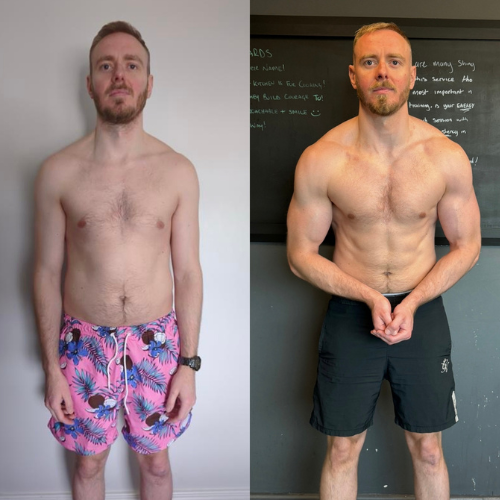
Want results like these? Download the free workshop to see the exact first steps our clients take.
More stories live inside our How to Lose Weight guide.
9. Frequently Asked Questions
How quickly will I lose weight?
With a 10–20 % calorie deficit you can expect 0.5–1 % of body-weight per week—roughly 0.5–1 kg for most adults. (nhs.uk)
Do I need to cut carbs?
Not unless carbs trigger overeating for you. Balance macros around workouts and total calories.
Won’t lifting make me bulky?
Muscle growth in a deficit is minimal; instead, you’ll look leaner as fat drops and definition emerges.
I’ve failed before—what’s different now?
Structured coaching plus habit architecture. Accountability transforms “knowing” into doing.
10. Action Plan
- Download the main guide—it’s free, instant, and packed with plug-and-play tools.
- Calculate your deficit with the worksheet.
- Schedule three strength sessions in your calendar.
- Add 2,000 steps to today’s baseline.
- Track sleep tonight—phone out of the bedroom!
Need expert eyes? Reach out via Open To Change and we’ll map your first month together.
Final Thoughts
Weight loss isn’t just about eating less; it’s a synergy of smart nutrition, progressive training, restorative lifestyle habits, and supportive coaching. Treat it as a skill to master, not a punishment to endure, and the results will stick for life.
Ready to begin? Download the How to Lose Weight guide now and take the first empowered step toward the healthiest version of you.