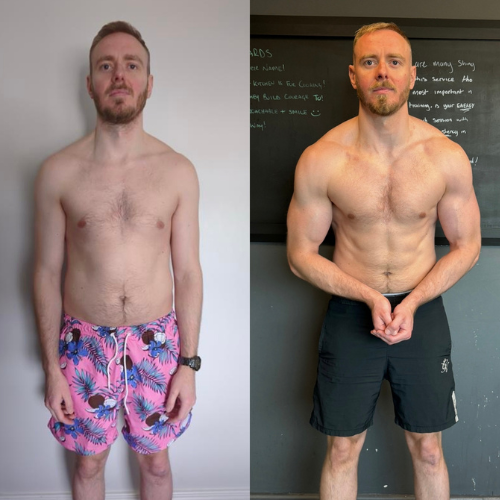
Online Personal Trainer Guide: How to Escape the “Skinny Fat” Trap and Reveal a Lean, Defined Physique
Feel light on the scales yet soft in the mirror? You’re not alone. Thousands of men and women sit in the hazy middle ground called “skinny fat”: low body-weight, but minimal muscle definition and pockets of stubborn fat around the waist, hips or arms. It’s frustrating—especially when you log hours of cardio and eat what seems like a healthy diet but still can’t achieve that firm, athletic look. The good news? A strategic mix of strength training, smart nutrition and recovery—delivered by a skilled online personal trainer—will reshape your body faster than you think.
This in-depth guide (1 500 + words) shows exactly how Ryan Kennedy and the team at Open to Change coaching turn “slim-but-soft” physiques into lean, strong, confident bodies. You’ll learn what skinny fat really means, why fixing it matters for health as well as aesthetics, and the customised roadmap—training, nutrition, recovery—that delivers sustainable results.
What “Skinny Fat” Really Means
Weight alone never tells the full story; body composition does. Skinny-fat individuals carry relatively low scale weight yet hold a higher ratio of body fat to lean mass. Signs include:
- Flat arms and legs but softness around belly or hips
- Poor posture and low strength numbers (few push-ups, pull-ups or squats)
- Fatigue despite “normal” BMI
The causes usually fall into four buckets:
- Excess cardio, minimal resistance work. Muscles shrink from under-stimulation; the body stores fat when stress hormones rise.
- Protein shortfall. Sub-optimal protein stalls muscle repair and growth.
- Poor progressive overload. Random workouts lack the structured load increases that signal muscle to adapt.
- Recovery debt. Inadequate sleep and chronic stress blunt anabolic hormones and raise visceral fat.
Why Solving Skinny Fat Is More Than Cosmetic
Even at a “healthy” weight, low muscle mass correlates with insulin resistance, reduced bone density and impaired metabolic flexibility. A 2019 review on sarco-osteoporosis links weak muscle–bone profiles to higher injury risk and chronic disease later in life. Boosting lean tissue while trimming excess fat is therefore vital for longevity—not just selfies.
Ryan Kennedy’s Four-Pillar Formula for Transformation
1. Personalised Strength Training
Cardio alone won’t cut it. Ryan creates tailored workout cycles that:
- Hit every major muscle group 2–3 times weekly
- Employ progressive overload—adding reps, sets or load every session
- Blend compound moves (squats, rows, presses) with accessory work for symmetry
Whether you own dumbbells, resistance bands or a full rack, each phase is scaled to your equipment and experience. Explore sample splits inside our online fitness plans.
2. Strategic Nutrition
Forget crash diets. To recomposition your body you’ll eat:
- Protein: 1.6–2.2 g / kg body-weight to repair muscle
- Moderate carbs around training for energy and glycogen
- Healthy fats (omega-3, monounsaturated) for hormones
Ryan’s nutrition support calculates macros, builds meal templates and teaches flexible tracking so you still enjoy family dinners and the odd pub night.
3. Smart Cardio
Marathon treadmill sessions drain muscle. Instead, the coaching platform prescribes:
- Two weekly HIIT circuits to spike post-exercise oxygen consumption (EPOC)
- Optional low-intensity walks or cycles for extra calories without cortisol overload
Check Ryan’s learn more here article for sample HIIT formats.
4. Recovery & Stress Management
Growth happens between workouts. Your plan integrates:
- 7–9 hours of sleep hygiene coaching
- Mindful mobility and mind-body coaching sessions
- Planned deload weeks to reset the nervous system
Weekly Training Templates
Beginner (3 Days)
- Day 1 · Full-Body Strength A
- Day 2 · Rest / 8 000-step walk
- Day 3 · Full-Body Strength B
- Day 4 · Yoga or mobility flow
- Day 5 · Interval Bike Sprints + Core
- Day 6–7 · Rest
Intermediate (4 – 5 Days)
- Day 1 · Upper Push/Pull
- Day 2 · Lower Strength
- Day 3 · Active Recovery (swim, Pilates)
- Day 4 · Full-Body Power Circuit
- Day 5 · HIIT Rower + Mobility
- Day 6 · Optional Glute-Focus Session
- Day 7 · Rest
Advanced (5 – 6 Days)
- Day 1 · Push (Chest/Shoulders/Triceps)
- Day 2 · Pull (Back/Biceps)
- Day 3 · Legs (Quad-Dominant)
- Day 4 · Active Recovery – Breathwork + Stretch
- Day 5 · Upper Strength Heavy
- Day 6 · Lower Strength Posterior Chain
- Day 7 · Rest
Common Skinny-Fat Mistakes
- Endless cardio. Swap half your running time for resistance circuits to build lean tissue.
- Low-protein meals. Aim for 25–35 g protein per meal; use Ryan’s see membership options for recipe packs.
- Inconsistent overload. Random workouts keep you spinning wheels. Structured logging inside the Open to Change app tracks reps, weight and rest automatically.
- Under-recovery. If you’re always sore or sleepy, you’re not adapting. Ryan programs deload weeks and active-rest days to supercharge gains.
Success Stories
Ella, 31: Dropped waist size by 10 cm while gaining visible shoulder caps in sixteen weeks—using only resistance bands at home.
Aaron, 42: Replaced 5 kg of fat with 5 kg of muscle in six months despite a desk job, following the tailored workout + macro plan.
Nina, 26: Went from “string-bean runner” to defined quads and glutes, shaving 90 seconds off her 5 k PB through periodised strength + HIIT.
FAQs
- Will I get bulky? No. Muscle gain for most adults is 0.25–0.5 kg/month. Ryan calibrates volume so you sculpt, not bloat.
- Can I train at home? Yes—body-weight, bands and dumbbells suffice. See home variations inside our personalised plan.
- Do I need supplements? Whole foods first. Whey protein or creatine can plug gaps but aren’t mandatory.
- How soon will I see changes? Most clients notice firmness within four weeks; friends comment by week eight when nutrition stays on point.
Take Your First Step Today
Stop spinning your wheels—unlock your personalised skinny-fat transformation plan now and start building a lean, powerful body that finally matches your hard work.