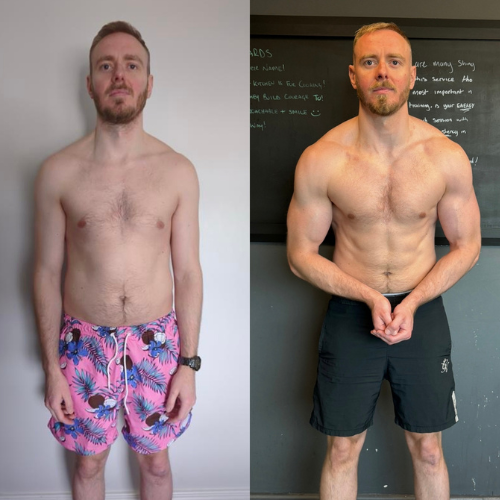
Online Personal Trainer Insights: How Many Days a Week Should You Work Out?
You’ve heard every answer under the sun—three days, five days, even seven. No wonder “How many days a week should I work out?” is still the most-googled fitness question. The truth? Training frequency isn’t one-size-fits-all; it reflects your goal, experience, schedule and recovery capacity. That’s why Open to Change coaching builds bespoke plans instead of prescribing a cookie-cutter routine. Below you’ll learn exactly how a certified fitness coach like Ryan Kennedy tailors weekly sessions for real-world results — and how you can apply the same principles today.
Why Personalised Programming Beats Generic Splits
- Your Goal Dictates Volume. Hypertrophy requires more weekly sets than basic cardiovascular fitness. A muscle-gain blueprint will feature four to six sessions, while a sustainable fat-loss schedule might run three to five.
- Experience Level Shapes Recovery. Beginners need additional rest to allow soft-tissue adaptation. Advanced lifters can tolerate (and may require) higher frequency—see the intermediate progression plan for examples.
- Stress and Sleep Modulate Readiness. An executive pulling 60-hour weeks might thrive on three high-quality sessions plus mobility, whereas a student with flexible hours can manage five focused workouts.
- Sustainability Beats Perfection. A three-day plan you follow beats a six-day plan you abandon. That’s why Ryan’s women’s strength programme offers 3-, 4- and 5-day tracks to match every diary.
Training Frequency by Goal
Muscle Growth (Hypertrophy) — 4 to 6 Days
Programme staples: progressive overload, compound lifts, strategic deloads.
Recommended splits: Upper/Lower, Push-Pull-Legs, or four-day Full-Body.
Recovery focus: 7–9 h sleep, 1 g protein per lb body-weight.
Why? Muscles grow in response to tension plus recovery. Hitting each muscle group 2–3 times weekly maximises protein synthesis while 48-hour rest windows prevent overreaching.
📌 Ready to build lean mass? Claim your custom hypertrophy roadmap.
Fat Loss — 3 to 5 Days
Programme staples: strength work for muscle retention, moderate cardio for caloric output, macro-controlled nutrition.
Sample schedule: 3× strength, 1× HIIT, 1× brisk-walk step target.
Recovery focus: stress management to keep cortisol in check.
Why? A slight calorie deficit combined with resistance training preserves lean tissue while encouraging fat mobilisation. Excessive sessions raise stress hormones and risk muscle loss.
📌 Unlock your fat-loss coaching pack and accelerate results.
General Fitness & Strength — 3 to 5 Days
Programme staples: balanced full-body moves, mobility, aerobic base-building.
Flexibility: mix weights, cycling, Pilates—whatever keeps you consistent.
Recovery focus: active rest—yoga, light walks, foam rolling.
Why? If longevity and functional strength outrank six-pack goals, three solid workouts plus lifestyle activity deliver superb dividends without crowding the calendar.
📌 Start a general-fitness plan that fits your life, not the other way round.
Rest Days: The Hidden Growth Multiplier
Overtraining is still the silent progress-killer. Warning signs include persistent soreness, dropping performance, irritability and poor sleep. Ryan helps clients schedule 1–2 complete rest days—or active recovery like mobility flow or hiking—so adaptation outpaces fatigue. The NHS exercise guidelines agree: rest and varied intensity are essential for sustainable gains.
Sample Weekly Templates
Beginner — 3 Days
- Mon · Full-Body Strength (A)
- Wed · Low-impact Cardio + Core
- Fri · Full-Body Strength (B)
- Sat/Sun · Optional mobility walk
📌 New lifter? Grab the starter full-body guide.
Intermediate — 4 Days
- Mon · Upper-Body Push/Pull
- Tue · Lower-Body Strength
- Thu · HIIT + Core
- Sat · Full-Body Power Circuit
📌 Need bespoke progression? Ryan’s intermediate coaching tier is built for you.
Advanced — 6 Days
- Mon · Push (Chest/Shoulder/Triceps)
- Tue · Pull (Back/Biceps)
- Wed · Legs (Quad-dominant)
- Thu · Active Recovery Mobility
- Fri · Upper Strength (Heavy)
- Sat · Lower Strength (Glute/Ham focus)
- Sun · Rest
📌 Serious about performance? Unlock a pro-level periodised plan.
Frequently Asked Questions
- Can I train every day? Technically yes, but smart periodisation alternates hard and easy days. Ryan uses micro-cycle planning inside online fitness plans to avoid burnout.
- Is three days really enough? Absolutely. With compound lifts, progressive overload and dialled-in nutrition, three sessions deliver impressive body-composition changes.
- Should I add cardio on lifting days? Depends on goals. Moderate post-lift cardio can aid fat loss, but high-intensity intervals might impair strength recovery. Your custom plan clarifies optimal pairing.
- Best rest-day activity? Aim for gentle movement—10 k steps, yoga, or the mind-body coaching breathwork routine.
Your Next Step
Stop guessing and start progressing—claim your personalised training schedule now and discover precisely how many days you should train for maximum results.